
Following up with customers is one of the most important parts of any business. Whether it is sales, recruitment, customer support, or marketing, timely follow-up emails help companies stay connected with people and build stronger relationships. But when teams have to send hundreds of emails manually every day, things can easily become slow and messy.
This is where Salesforce makes a huge difference. Salesforce allows businesses to automate follow-up emails so teams can save time, respond faster, and never miss important communication.
Today, many companies are moving towards automation because manual follow-ups often lead to delays, missed opportunities, and inconsistent communication. Automated email workflows help businesses create a smoother and more professional experience for customers.
Why Follow-Up Emails Matter So Much
A lot of business opportunities are lost simply because there was no proper follow-up. Sometimes a lead is interested but busy. Sometimes a customer forgets to respond. In recruitment, candidates may miss updates if recruiters fail to follow up on time.
Consistent follow-up communication helps businesses:
- Stay connected with leads and customers
- Improve response rates
- Build trust and professionalism
- Increase conversions and sales
- Save time for employees
- Reduce manual work
The biggest advantage is that automation ensures no important email gets forgotten.
How Salesforce Helps with Email Automation
Salesforce provides several ways to automate follow-up emails using tools like:
- Flow Automation
- Workflow Rules
- Process Builder
- Email Templates
- Marketing Automation Tools
- Scheduled Actions
These tools allow admins to create automated processes based on different business scenarios.
For example:
- Send a welcome email when a lead is created
- Send reminders if a customer does not reply
- Send interview updates to candidates
- Send follow-ups after meetings
- Notify customers about support case updates
Everything happens automatically based on predefined conditions.
Creating Email Templates Saves Huge Time
One of the easiest ways to improve email communication in Salesforce is by using email templates. Instead of typing the same message repeatedly, businesses can create reusable templates for common scenarios.
Templates can include:
- Customer names
- Company names
- Meeting details
- Job information
- Support ticket updates
This makes emails look personalized without requiring manual effort every time.
For example, a recruiter can automatically send an interview confirmation email with candidate details already included.
Automating Lead Follow-Ups
Sales teams often struggle with lead management because new leads come from multiple sources like websites, social media, campaigns, and referrals.
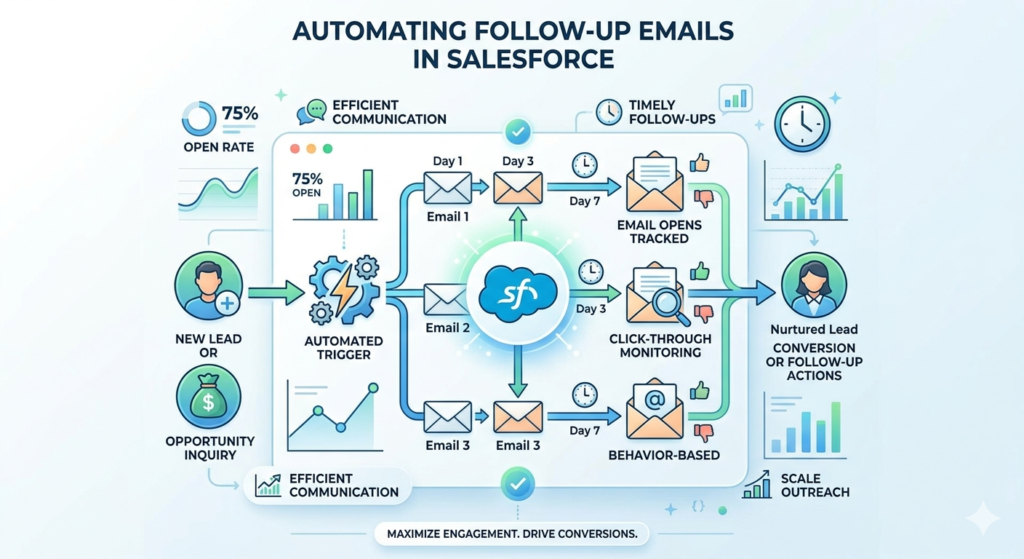
With Salesforce automation, businesses can instantly send follow-up emails whenever a new lead enters the system.
A simple automation flow may work like this:
- Lead gets created in Salesforce
- Salesforce automatically sends a welcome email
- If there is no response after 3 days, another follow-up email is triggered
- Sales rep gets notified to contact the lead personally
This process improves engagement and increases the chances of conversion.
Recruitment Follow-Up Automation
Recruitment agencies also benefit heavily from email automation. Recruiters deal with hundreds of candidates, and manual follow-ups can become difficult.
Salesforce can automate emails for:
- Interview scheduling
- Resume submission confirmation
- Offer letter updates
- Candidate rejection emails
- Joining reminders
This keeps candidates informed throughout the hiring process and creates a better recruitment experience.
Customer Support Email Automation
Customer support teams can also use Salesforce to improve communication with customers.
Automated emails can be triggered when:
- A support case is created
- A ticket is updated
- An issue is resolved
- SLA deadlines are approaching
Customers appreciate regular updates because they feel their issue is being handled properly.
Benefits of Automating Follow-Up Emails
There are several reasons why businesses invest in email automation inside Salesforce.
Better Productivity
Employees spend less time writing repetitive emails and more time focusing on important tasks.
Faster Communication
Customers receive responses immediately instead of waiting for manual replies.
Consistent Messaging
Automation ensures all customers receive professional and standardized communication.
Higher Conversion Rates
Regular follow-ups improve engagement and increase the chances of closing deals.
Reduced Human Errors
Automation minimizes the risk of forgetting follow-ups or sending incorrect information.
Things to Keep in Mind While Automating Emails
Even though automation is helpful, businesses should avoid making emails feel robotic. A good follow-up email should still sound natural and personalized.
Here are a few best practices:
- Keep email content simple and clear
- Avoid sending too many emails
- Personalize emails whenever possible
- Use proper subject lines
- Test workflows before deployment
- Monitor email performance regularly
The goal is to improve communication, not overwhelm customers with automated messages.
Using Salesforce Flow for Modern Automation
Today, most Salesforce admins prefer using Salesforce Flow for automation because it is more powerful and flexible compared to older tools like Workflow Rules and Process Builder.
With Flow, admins can create advanced email automation processes with:
- Conditional logic
- Scheduled actions
- Multi-step approvals
- Dynamic email content
- Integration with external systems
This gives businesses much more control over how follow-up communication works.
Final Thoughts
Automating follow-up emails in Salesforce is one of the smartest ways to improve communication and productivity inside a business. Whether it is sales, recruitment, marketing, or customer support, automation helps teams stay organized and responsive without increasing manual workload.
Instead of worrying about missed follow-ups and delayed responses, businesses can create automated workflows that handle communication efficiently and professionally.
In today’s fast-moving business environment, quick and consistent communication matters more than ever. Salesforce email automation helps companies save time, improve customer experience, and build stronger business relationships in a much smarter way.