
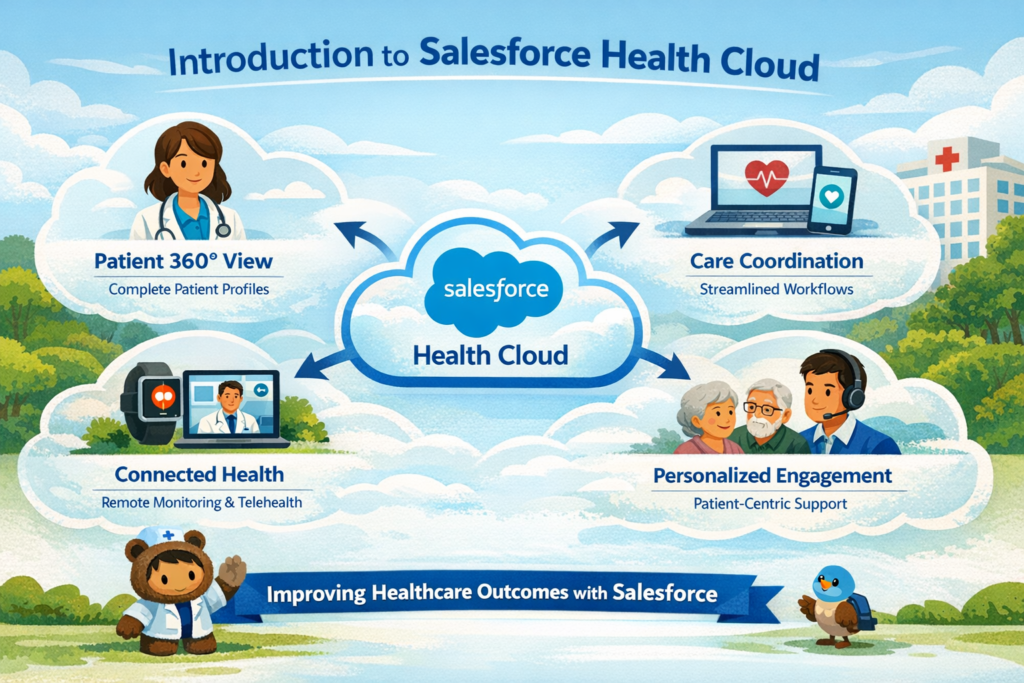
In today’s healthcare industry, managing patient data is not just about storing information. It is about creating a connected, personalized, and efficient experience for patients, doctors, and healthcare providers.
This is where Salesforce Health Cloud plays an important role.
If you are new to Health Cloud or planning to explore it as a career option, this guide will help you understand everything in simple English with step-by-step explanation.
What is Salesforce Health Cloud
Salesforce Health Cloud is a specialized healthcare solution built on the Salesforce platform. It helps healthcare organizations manage patient relationships, clinical data, and care processes in one place.
In simple words, it is a system that brings together all patient-related information and helps healthcare providers deliver better care.
Why Health Cloud is Important
Healthcare is becoming more digital, and patients expect better service just like in other industries.
Health Cloud helps organizations:
- Manage patient data efficiently
- Provide personalized care
- Improve communication between teams
- Track patient journeys
It focuses on patient-centric care, which means everything is designed around the patient’s needs.
Key Features of Salesforce Health Cloud
Let’s understand the main features that make Health Cloud powerful.
1. Patient 360 View
This is one of the most important features.
Health Cloud provides a complete view of a patient, including:
- Personal details
- Medical history
- Appointments
- Medications
- Care plans
Example:
A doctor can see all patient details in one place instead of checking multiple systems.
2. Care Plans Management
Care plans help manage patient treatment.
With Health Cloud, you can:
- Create care plans
- Assign tasks to healthcare providers
- Track progress
Example:
For a patient with diabetes, you can create a care plan that includes:
- Regular checkups
- Medication reminders
- Lifestyle tracking
3. Clinical Data Model
Health Cloud provides a structured way to store healthcare data.
It includes:
- Patient records
- Conditions
- Allergies
- Treatments
This helps in maintaining standardized data across the system.
4. Appointment Management
Health Cloud allows:
- Scheduling appointments
- Tracking visits
- Managing follow-ups
This improves efficiency and reduces missed appointments.
5. Integration with Other Systems
Healthcare systems often use multiple tools.
Health Cloud can integrate with:
- Electronic Health Records (EHR)
- Third-party systems
- Mobile applications
This ensures all data is connected.
6. Security and Compliance
Healthcare data is sensitive.
Health Cloud ensures:
- Data security
- Compliance with regulations
- Controlled access
Step-by-Step: How Health Cloud Works
Let’s understand how Health Cloud works in a real scenario.
Step 1: Patient Registration
A patient is added to the system with:
- Personal details
- Contact information
Step 2: Data Collection
Medical data is captured:
- Conditions
- History
- Medications
Step 3: Care Plan Creation
A care plan is created based on patient needs.
Step 4: Task Assignment
Tasks are assigned to:
- Doctors
- Nurses
- Care coordinators
Step 5: Monitoring and Updates
Patient progress is tracked and updated regularly.
Step 6: Continuous Engagement
Patients receive:
- Reminders
- Notifications
- Follow-ups
Real-Life Use Case
Let’s take a simple example.
A hospital wants to improve patient care.
Using Health Cloud:
- They store all patient data in one system
- Doctors access complete patient history
- Care plans are created for each patient
- Patients receive appointment reminders
- Hospital improves patient satisfaction
Benefits of Salesforce Health Cloud
Here are some key advantages:
1. Better Patient Experience
Personalized care improves satisfaction.
2. Improved Efficiency
All data is available in one place.
3. Enhanced Collaboration
Teams can work together easily.
4. Data-Driven Decisions
Insights help in better decision-making.
Common Challenges and Solutions
Challenge 1: Data Complexity
Solution: Use standardized data models
Challenge 2: User Adoption
Solution: Provide proper training
Challenge 3: Integration Issues
Solution: Use APIs and integration tools
Best Practices for Using Health Cloud
To get the best results, follow these tips:
- Keep data clean and updated
- Use automation wherever possible
- Ensure proper user roles and permissions
- Focus on patient engagement
Career Opportunities in Health Cloud
Health Cloud is growing rapidly, and there is high demand for professionals.
Roles include:
- Salesforce Health Cloud Consultant
- Administrator
- Developer
Learning Health Cloud can open new career opportunities in the healthcare domain.
Final Thoughts
Salesforce Health Cloud is transforming the healthcare industry by making patient care more connected, personalized, and efficient.
It is not just a tool, it is a complete solution that helps healthcare organizations deliver better outcomes.
If you are planning to grow your career in Salesforce, learning Health Cloud can give you a strong advantage in the market.